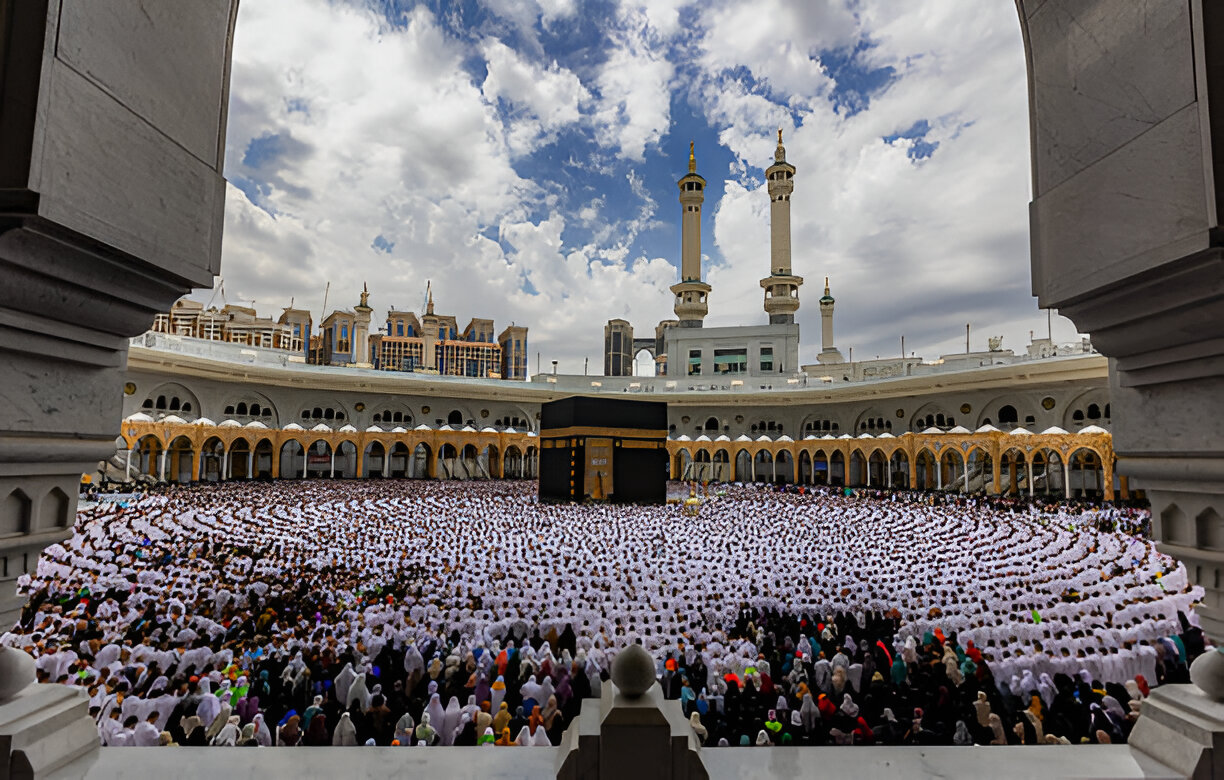

The annual Haj pilgrimage has commenced in Saudi Arabia, with millions of Muslims from around the world gathering in Mecca for the five‑day spiritual journey. The pilgrimage, one of the largest religious gatherings globally, began under heightened security and logistical arrangements to ensure the safety and comfort of worshippers.
Saudi authorities confirmed that extensive preparations were made to manage the influx of pilgrims, including health services, crowd control measures, and transport facilities. The Haj rituals, which include Tawaf around the Kaaba, standing at Arafat, and symbolic stoning of the devil, will be performed over the coming days.
This year’s Haj takes place against the backdrop of regional tension in West Asia, with ongoing conflicts and geopolitical strains raising concerns about stability. Despite these challenges, Saudi officials assured that the pilgrimage will proceed smoothly, emphasizing that religious obligations remain a priority.
Observers note that the Haj serves not only as a spiritual milestone for Muslims but also as a demonstration of unity and resilience amid global and regional uncertainties. Pilgrims expressed gratitude for being able to perform the sacred rites, many describing it as a once‑in‑a‑lifetime experience.
International leaders and Islamic scholars have called for peace and solidarity during the pilgrimage, urging that the spirit of Haj inspire dialogue and reconciliation across the region.