
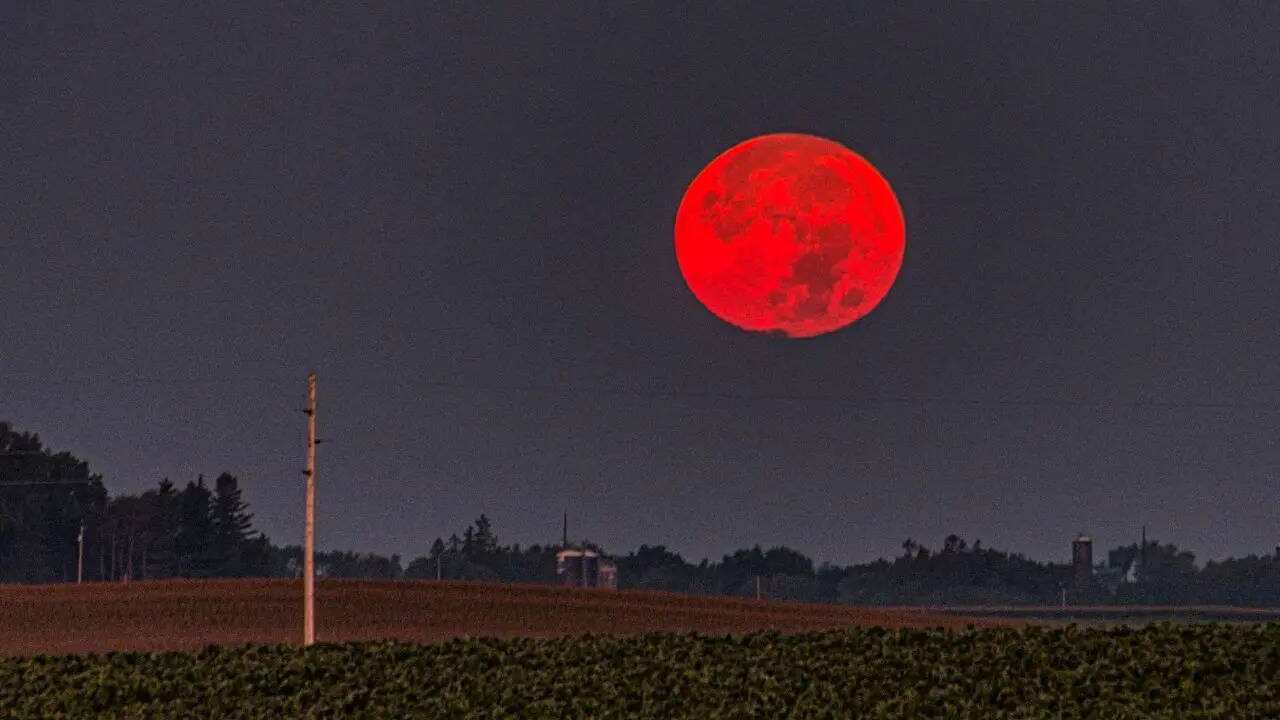

India will witness a total lunar eclipse, popularly known as a Blood Moon, on March 3, 2026. The celestial event will be visible across most parts of the country at moonrise, coinciding with Holi celebrations. Skywatchers can expect the Moon to appear in a deep reddish hue as Earth’s shadow fully covers it.
According to astronomers, the eclipse will begin with totality at 4:34 PM IST, reaching its maximum phase at 5:03 PM. The phenomenon will be best observed in northeastern states, while western regions may see only a partial glimpse due to timing and horizon conditions. The eclipse will conclude by 7:53 PM IST.
Experts note that this will be the first total lunar eclipse of 2026, offering a rare opportunity for observers to witness the dramatic transformation of the Moon without the need for special equipment. A clear view of the eastern horizon at moonrise will be essential for optimal visibility.
Traditional beliefs surrounding the Chandra Grahan will also come into focus, with the Sutak period beginning at 6:20 AM on March 3. Religious authorities have advised devotees to follow customary practices during the eclipse, which coincides with the festival of colors.
Scientists emphasize that the Blood Moon effect occurs when sunlight passes through Earth’s atmosphere and refracts onto the lunar surface, giving it a coppery-red glow. The event highlights the dynamic interplay between celestial bodies and offers a striking reminder of nature’s grandeur.