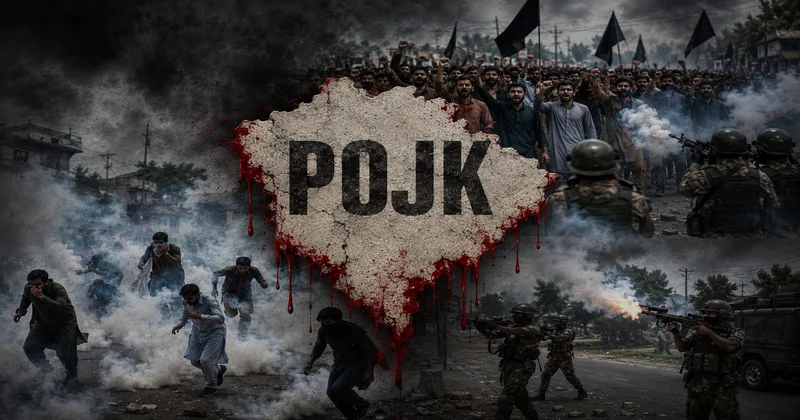

The ongoing unrest in Pakistan-occupied Jammu and Kashmir (PoJK) has increasingly taken an international turn, with members of the Kashmiri diaspora organising demonstrations in different countries and calling for greater global attention to developments in the region. The protests have highlighted allegations of violence, political suppression and human rights concerns, while diaspora groups are seeking international scrutiny of Pakistan’s handling of the situation.
In Belgium, Kashmiri diaspora groups staged a march in Brussels from the European Parliament towards the United Nations, urging the international community to take note of the situation in PoJK. Demonstrators sought greater international attention to what they described as state-sponsored repression and called for accountability over alleged violations of human rights.
The protests have also found support among sections of the Kashmiri diaspora in the United Kingdom and the United States. Demonstrations in London and Washington have called for international intervention and greater scrutiny of the situation in Pakistan-administered Kashmir. More than 50 UK lawmakers have also reportedly expressed concern over the violence and humanitarian situation, seeking clarification from the British government on the steps being taken.
The unrest in PoJK has been driven by a range of political and economic grievances, including concerns over governance, representation, economic hardship and the conduct of elections. The Jammu Kashmir Joint Awami Action Committee (JAAC) has played a prominent role in the protest movement, while authorities in Pakistan have faced criticism over their response to demonstrations.
The situation has also raised concerns over press freedom. Pakistan has introduced restrictions affecting the movement of foreign journalists outside major cities, with media organisations and rights groups warning that such measures could make independent reporting on the unrest more difficult. Reports have also highlighted restrictions on communications and access to information during periods of heightened tension.
India has called for greater international scrutiny of the situation in PoJK and has criticised Pakistan’s handling of the protests. Jammu and Kashmir Chief Minister Omar Abdullah has also urged the international community to examine developments in Pakistan-administered Kashmir, arguing that global attention should be consistent when human rights concerns arise on either side of the Line of Control.
With protests and political tensions continuing, the developments in PoJK have moved beyond a domestic issue and are attracting growing attention from diaspora organisations, lawmakers, media outlets and international observers. The continuing unrest is likely to keep the region under international scrutiny as concerns over governance, human rights and political representation remain unresolved.