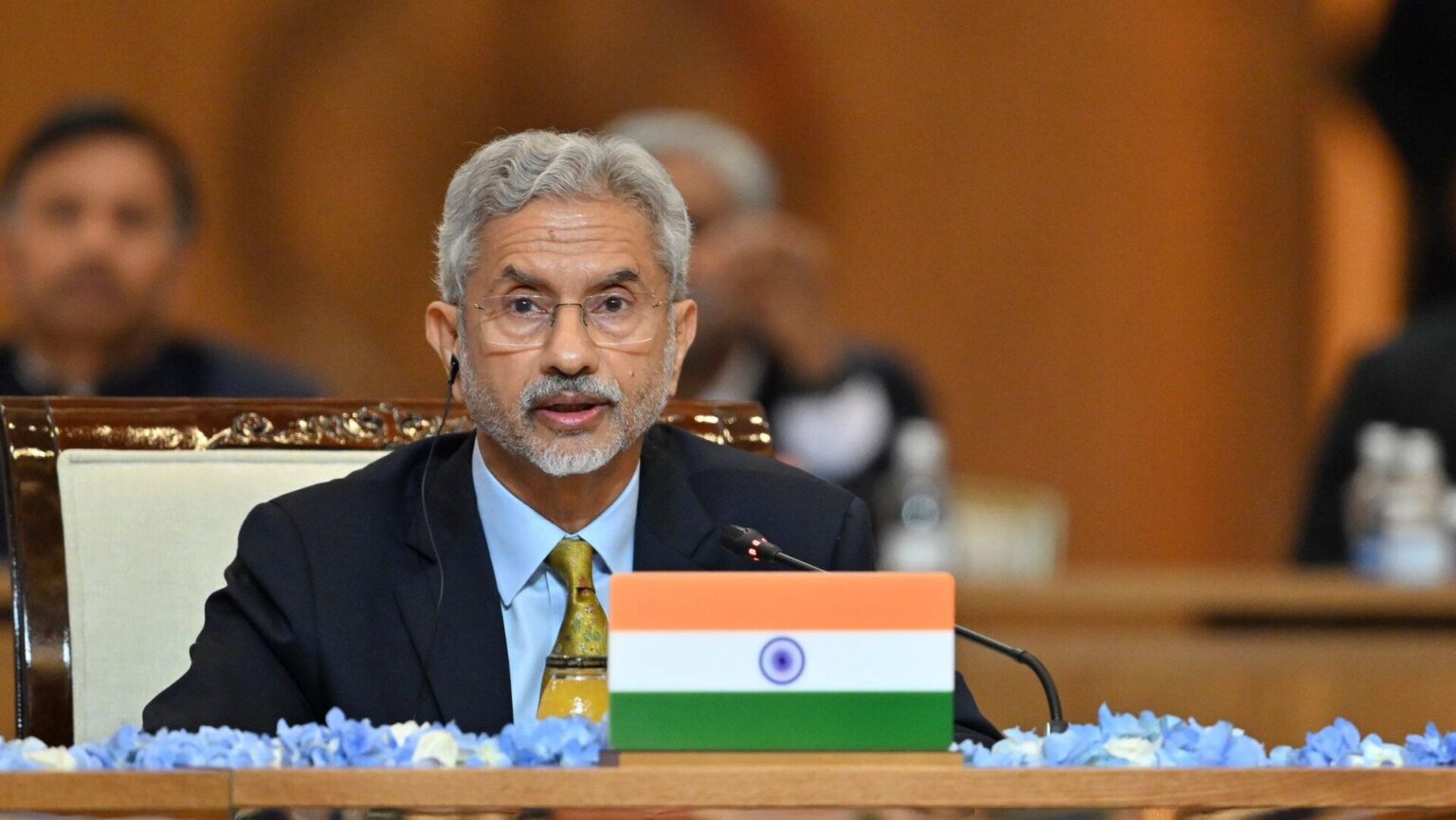

External Affairs Minister S. Jaishankar will co-chair the 27th Session of the India-Russia Inter-Governmental Commission on Trade, Economic, Scientific, Technological and Cultural Cooperation (IRIGC-TEC) with Russian First Deputy Prime Minister Denis Manturov in Moscow today, August 24, 2026. Jaishankar arrived in Moscow on August 23 for a two-day official visit at the invitation of Manturov.
During the meeting, India and Russia are expected to review progress in bilateral cooperation and discuss ways to further strengthen economic and commercial ties. The IRIGC-TEC serves as an important institutional mechanism for advancing cooperation between the two countries in areas including trade, investment, energy, industrial cooperation, science and technology, pharmaceuticals, information and communication technology, chemicals and fertilisers, mining and culture.
Jaishankar will also meet Russian Foreign Minister Sergey Lavrov and exchange views on regional and global developments. The discussions are expected to cover issues of mutual interest and developments affecting the wider international situation.
India and Russia share a longstanding strategic partnership that has expanded across political, security, defence, trade and economic relations, science and technology, culture and people-to-people contacts. The two countries have institutionalised several dialogue mechanisms to regularly review cooperation and advance bilateral ties.
The India-Russia Inter-Governmental Commission has two divisions: the IRIGC-TEC, which deals with trade, economic, scientific, technological and cultural cooperation, and the IRIGC-M&MTC, which covers military and military-technical cooperation. The latter is headed by the defence ministers of the two countries.
Jaishankar’s Moscow visit comes amid continued efforts by New Delhi and Moscow to deepen their multifaceted partnership and ahead of further high-level engagements between the two countries. The talks are expected to provide an opportunity to review existing cooperation and identify new areas for bilateral collaboration.