
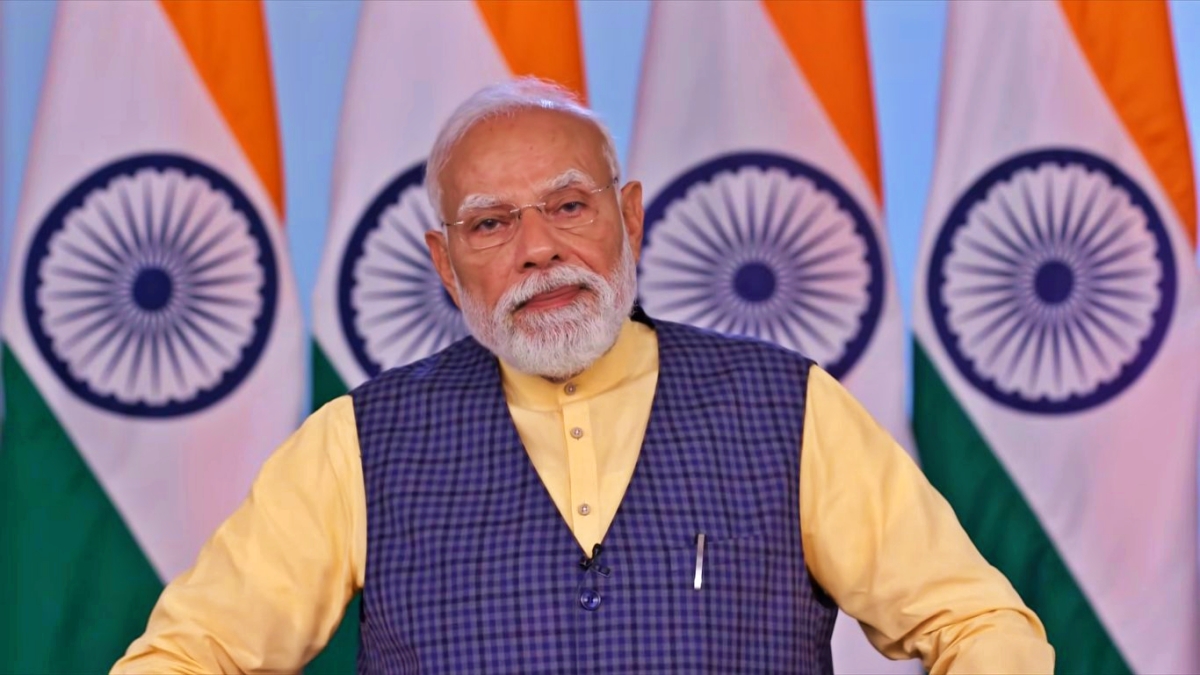

Prime Minister Narendra Modi on Friday flagged off India’s first hydrogen-powered train from Jind in Haryana, marking a major milestone in the country’s clean energy journey. The train, named “NaMo Green Rail,” will operate on the 89-km Jind–Sonipat route, halting at 12 intermediate stations and carrying up to 2,600 passengers.
Powered by hydrogen fuel cell technology, the train produces only water vapour as a by-product, ensuring zero carbon emissions. With a 3,200 HP propulsion system, it is among the most powerful hydrogen-powered passenger trains globally. Styled in a striking sky-blue and white colour scheme, the train consists of two hydrogen-powered driving coaches and eight passenger coaches.
Addressing the gathering, PM Modi described the launch as a proud symbol of Aatmanirbhar Bharat and a successful example of the ‘Make in India’ initiative. He emphasized that while the 19th century was defined by steam engines and the 20th century by electricity, the 21st century will be driven by hydrogen mobility.
The Prime Minister also highlighted the strategic importance of reducing dependence on imported fossil fuels, noting that disruptions in global supply routes could have severely impacted India’s rail network in the past. He praised Indian Railways for accelerating electrification and now pioneering hydrogen-based transport.
Alongside the train launch, Modi inaugurated and laid the foundation stone for development projects worth over ₹14,700 crore in Haryana, spanning railways, highways, urban development, and public services. The hydrogen train pilot project includes a dedicated hydrogen production, storage, and refuelling facility at Jind, paving the way for future expansion across heritage and tourist routes.
With this launch, India joins a select group of nations operating hydrogen-powered trains, reinforcing its commitment to sustainable development and green mobility. The initiative supports India’s broader goal of achieving net-zero emissions by 2070.