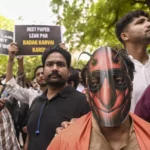
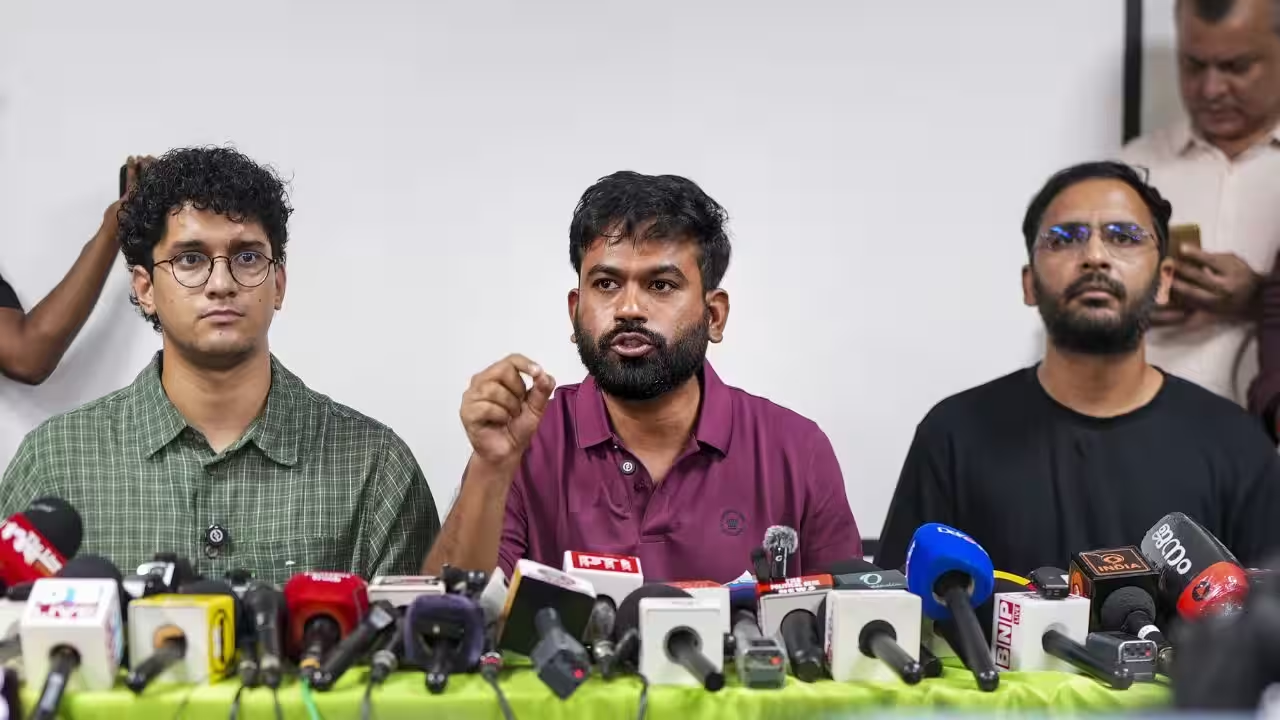

New Delhi: Security was tightened across Delhi ahead of the October 10 protest called by the Cockroach Janta Party (CJP) at Jantar Mantar, with around 25,000 police and paramilitary personnel deployed. Authorities stepped up checks at border crossings, railway stations, bus terminals, hotels and other sensitive locations after police refused permission for the gathering.
The proposed demonstration was organised to demand the resignation of Chief Election Commissioner Gyanesh Kumar. Police said the security arrangements were intended to prevent an unauthorised gathering and maintain order amid the possibility of a large turnout.
Metro travel was also affected. The initial announcement covered entry and exit restrictions at 57 stations, but the Delhi Metro Rail Corporation later reduced the number to 45. The revised advisory set the restrictions from 9 pm on October 9 until 6 pm on October 10. Interchange facilities were to remain available at the affected stations, except New Delhi.
Mobile internet services were ordered suspended in a designated four-kilometre area of central Delhi from 10 pm on October 9 to 10 pm on October 10. The restriction applied to mobile data services in that area rather than across the entire capital, with internet services elsewhere in Delhi remaining unaffected, according to reports.
Police also put a detailed monitoring system in place in New Delhi district, dividing it into 20 zones under senior officers. The arrangements were designed to allow officers to coordinate security checks and respond quickly to any law-and-order problem.
Explaining the refusal to allow the protest, Joint Commissioner of Police Nupur Prasad said the organisers had submitted their application on October 7, three days before the planned event. According to police, the required notice period was at least 10 days. Officers also raised concerns about compliance with police directions during an earlier protest in July.
The measures extended beyond Jantar Mantar, bringing tighter checks and restrictions to several parts of the city. With access to numerous Metro stations affected and additional security checks in place, people travelling through Delhi faced changes to their usual routes.