
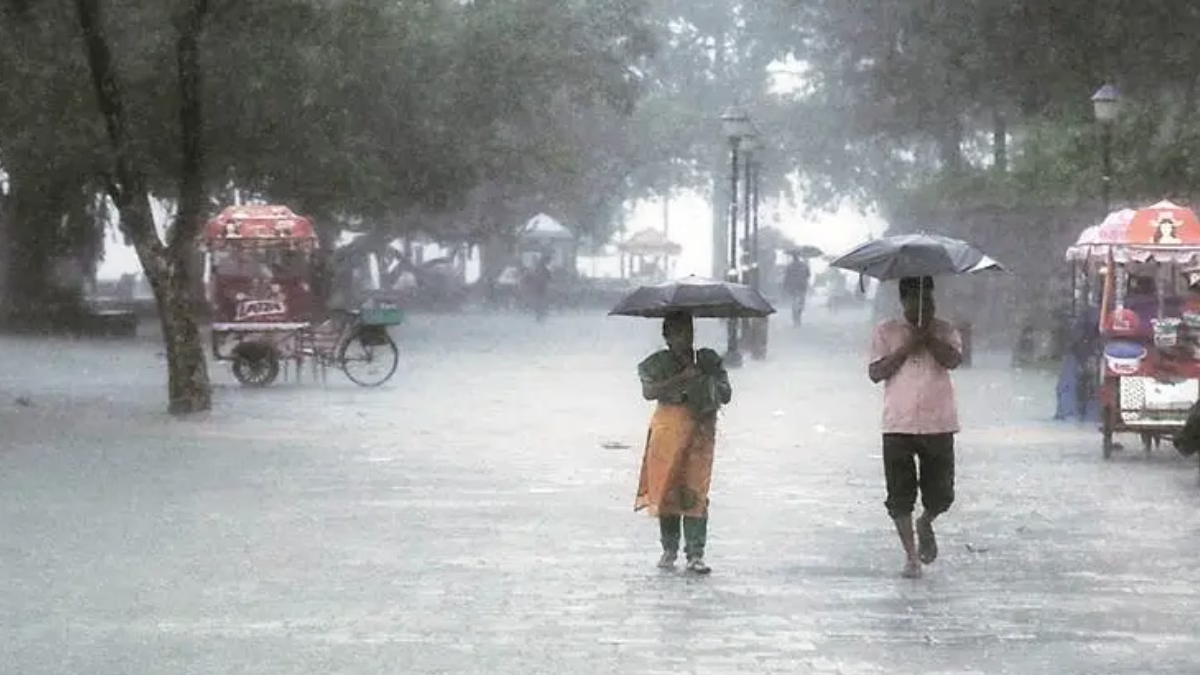

The India Meteorological Department (IMD) has forecast heavy rainfall over Tamil Nadu, Puducherry, and Karaikal, with thunderstorms and isolated downpours expected to continue until November 13. Several districts in Tamil Nadu are already experiencing waterlogging, traffic disruptions, and precautionary closures of schools. Authorities have issued warnings for thunderstorms accompanied by lightning, urging residents to remain indoors and avoid vulnerable areas.
Meanwhile, North and Central India are reeling under a cold wave. Severe cold wave conditions are prevailing across Madhya Pradesh, with temperatures dipping 4–7 degrees Celsius below normal. South Haryana, Chhattisgarh, Delhi, Chandigarh, and East Rajasthan are also experiencing sharp drops in minimum temperatures, which are expected to continue until November 15. Higher-altitude regions in Uttarakhand and Himachal Pradesh have reported the season’s first snowfall, while lower areas are witnessing rain and chilly winds.
In the national capital region, Delhi’s air quality has deteriorated to the ‘severe’ category. According to the Central Pollution Control Board (CPCB), the average Air Quality Index (AQI) stood at 413 as of 7 am today. Specific monitoring stations recorded alarming levels: Anand Vihar at 438, RK Puram at 431, and Patparganj at 436. The Commission for Air Quality Management (CAQM) has imposed Stage III of the Graded Response Action Plan (GRAP), which includes restrictions on construction activities, bans on diesel generator use, and advisories for residents to minimize outdoor exposure.
Experts warn that prolonged exposure to such hazardous air quality can lead to respiratory illnesses, eye irritation, and cardiovascular complications. Health advisories recommend the use of N95 masks, air purifiers indoors, and limiting physical activity outdoors, especially for children and the elderly.
The IMD has also forecast a further fall in minimum temperatures by 2–3 degrees Celsius across northeastern states in the coming days, signaling a broader spread of cold wave conditions. Southern states like Kerala are expected to see scattered rainfall, while western and northern regions will remain dry but cold.
Authorities across affected regions are coordinating relief measures, including flood preparedness in Tamil Nadu and emergency health advisories in Delhi. The combined impact of heavy rains, cold waves, and severe pollution underscores the diverse weather challenges India is facing this November.