
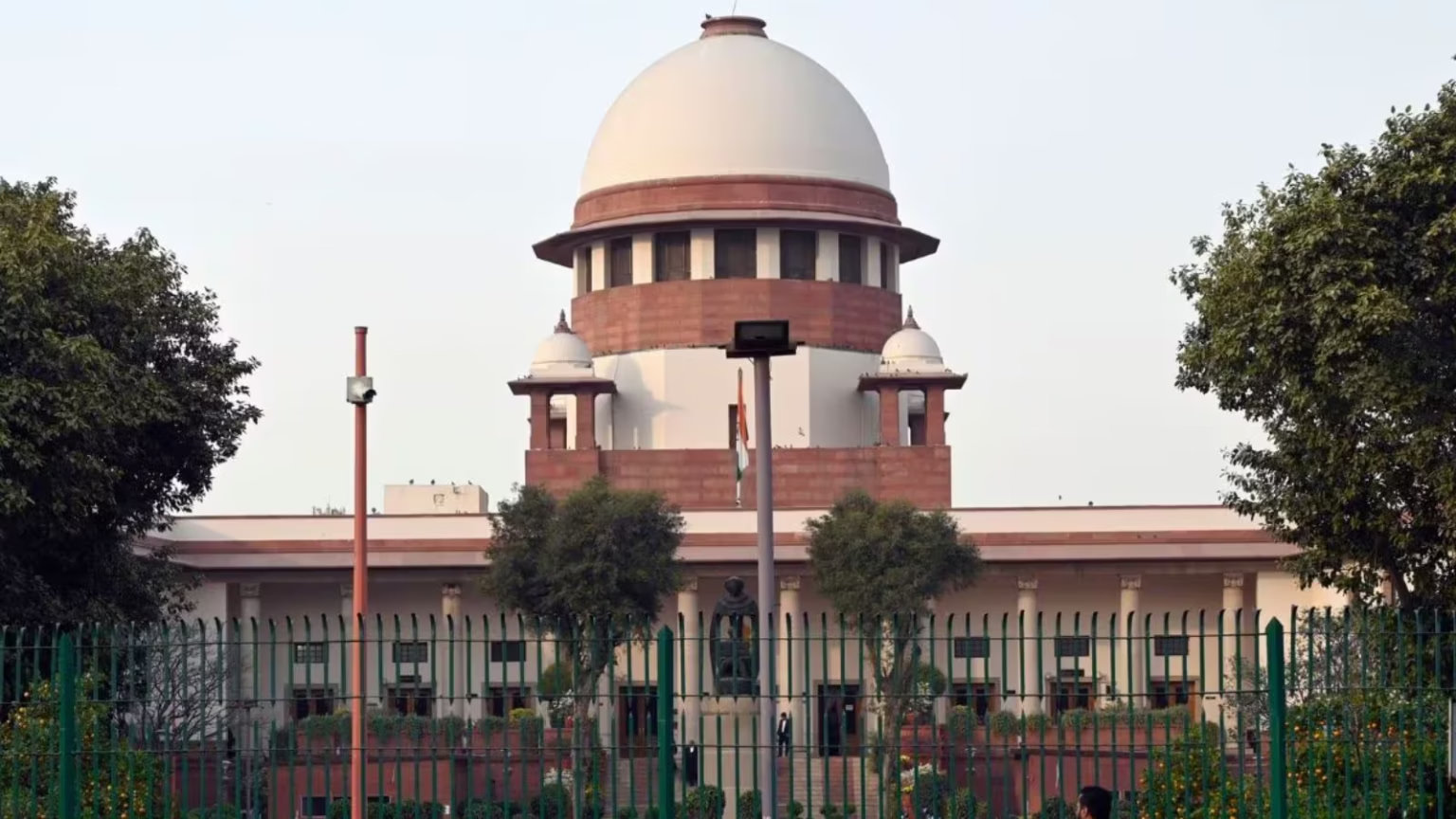

The Supreme Court today delivered its verdict on petitions challenging the Election Commission’s Special Intensive Revision (SIR) of electoral rolls, particularly in Bihar and West Bengal. The Court upheld the Election Commission’s constitutional authority under Article 324 to conduct the exercise, ruling that the SIR cannot be struck down as unconstitutional.
Petitioners, including civil society groups and political leaders, had argued that the SIR resembled an NRC-like process, disproportionately affecting migrants and marginalized communities. They highlighted that nearly 65 lakh names were deleted in Bihar and over 91 lakh in West Bengal, raising concerns of disenfranchisement.
The Election Commission defended the exercise, stating it was aimed at purifying electoral rolls by removing duplicate, deceased, or migrated voters. It emphasized that the process was conducted transparently and in accordance with the Representation of the People Act, 1950, and related rules.
The Supreme Court observed that the inclusion or exclusion of names in electoral rolls falls within the constitutional domain of the Election Commission. While acknowledging concerns raised by petitioners, the Court reaffirmed that the Commission has wide powers to ensure accuracy and integrity in voter lists.
This verdict carries significant implications for electoral roll management nationwide, as the SIR process has already been extended to multiple states including Kerala, Tamil Nadu, Puducherry, West Bengal, Uttar Pradesh, Gujarat, and Rajasthan. It sets a precedent for how far the Election Commission can go in revising rolls without being accused of overstepping into citizenship verification.