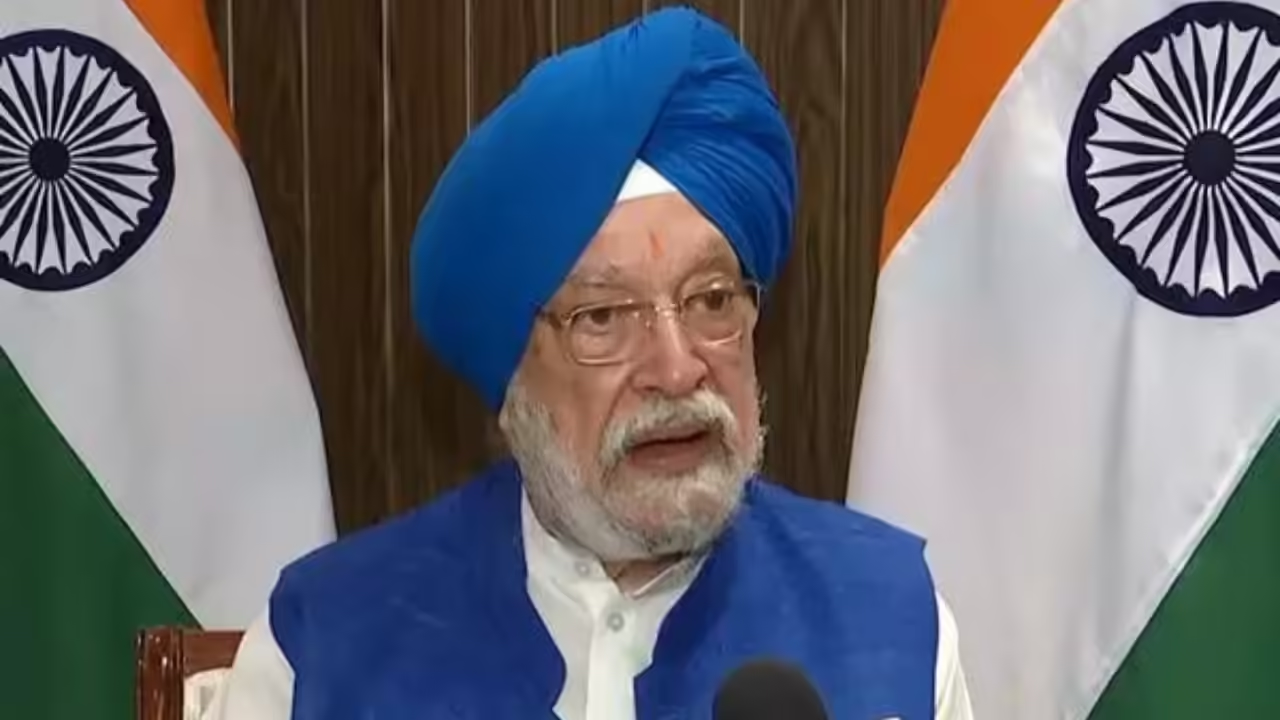

Union Petroleum Minister Hardeep Singh Puri has said that India’s future mobility will be shaped by a multi-fuel ecosystem combining electric vehicles (EVs), biofuels, hydrogen, and renewables. He emphasized that the country will not rely on a single technology but instead adopt diverse solutions to meet its transport needs.
Puri highlighted that ethanol blending has already saved ₹1.84 lakh crore in foreign exchange, substituted 302 lakh metric tonnes of crude oil, and reduced 909 lakh metric tonnes of carbon dioxide emissions. He noted that India has achieved 20% ethanol blending six years ahead of the 2030 target, underscoring the success of biofuel adoption.
He pointed to the launch of Hero MotoCorp’s first flex-fuel motorcycle as a milestone in India’s journey toward mass-market flex-fuel mobility. Ethanol-based fuel (E85) is expected to be substantially cheaper than petrol, making it attractive for consumers while boosting farmers’ incomes by turning them from “annadata” (food providers) into “urjadaata” (energy providers).
Puri also stressed the role of hydrogen, citing Indian Oil Corporation’s trials of green hydrogen-powered fuel cell buses in Delhi, Haryana, and Uttar Pradesh. He said India’s National Hydrogen Mission aims to cut hydrogen costs below $3 per kilogram, positioning the country as a competitive global producer.
According to the minister, India’s synchronous grid and renewable energy capacity will support the integration of EVs, biofuels, and hydrogen, ensuring energy security, reducing dependence on imported crude, and advancing the nation’s climate goals under the Viksit Bharat 2047 vision.