
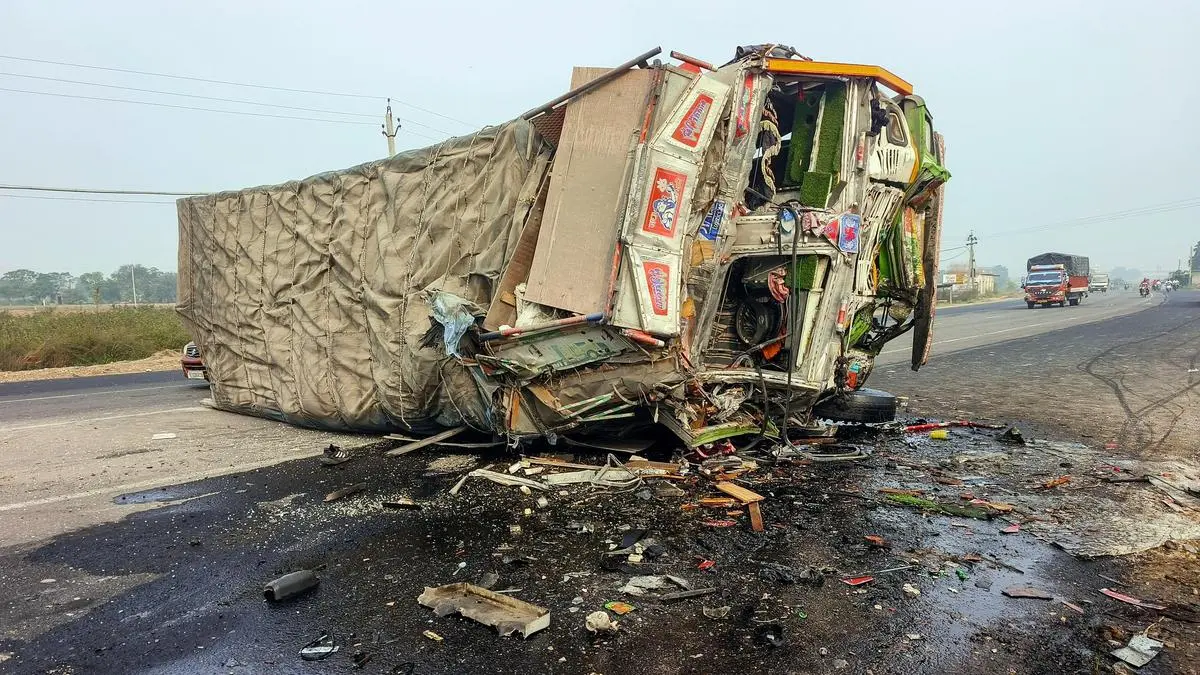

New Delhi, November 2, 2025 — In a significant move to enhance road safety, the Ministry of Road Transport and Highways has announced that contractors responsible for National Highway stretches under the build-operate-transfer (BOT) model will face financial penalties if more than one accident occurs annually on a specific segment.
According to Road Transport and Highways Secretary V Umashankar, the BOT agreement has been revised to include mandatory crash management protocols. Contractors must implement corrective measures if multiple accidents are reported on a 500-meter stretch within a year.
“If more than one accident occurs on the same stretch, the contractor will be fined ₹25 lakh. If another incident happens the following year, the penalty will increase to ₹50 lakh,” Umashankar stated.
The ministry has identified approximately 3,500 accident-prone zones across the country. National Highway projects are executed under various models, including BOT, Hybrid Annuity Model (HAM), and Engineering Procurement and Construction (EPC). Under the BOT model, the concession period ranges from 15 to 20 years, during which the contractor is responsible for maintenance.
In contrast, EPC projects have a defect liability period of five years for bituminous roads and ten years for concrete roads. Other models like Toll-Operate-Transfer (TOT), Infrastructure Investment Trusts (InvIT), and Operate-Maintain-Transfer (OMT) have concession periods ranging from 9 to 30 years.
In a parallel initiative, the ministry is preparing to launch a nationwide cashless treatment scheme for road accident victims. The scheme, which was piloted in Chandigarh and later expanded to six states, will offer up to ₹1.5 lakh in cashless medical care for the first seven days following an accident at designated hospitals.
“Any individual injured in a road accident involving a motor vehicle on any road will be eligible for cashless treatment under this scheme,” the ministry noted in a notification issued earlier this year.
The initiative aims to reduce fatalities caused by delays in emergency medical care and will incorporate lessons learned from the pilot phase to improve implementation nationwide.