
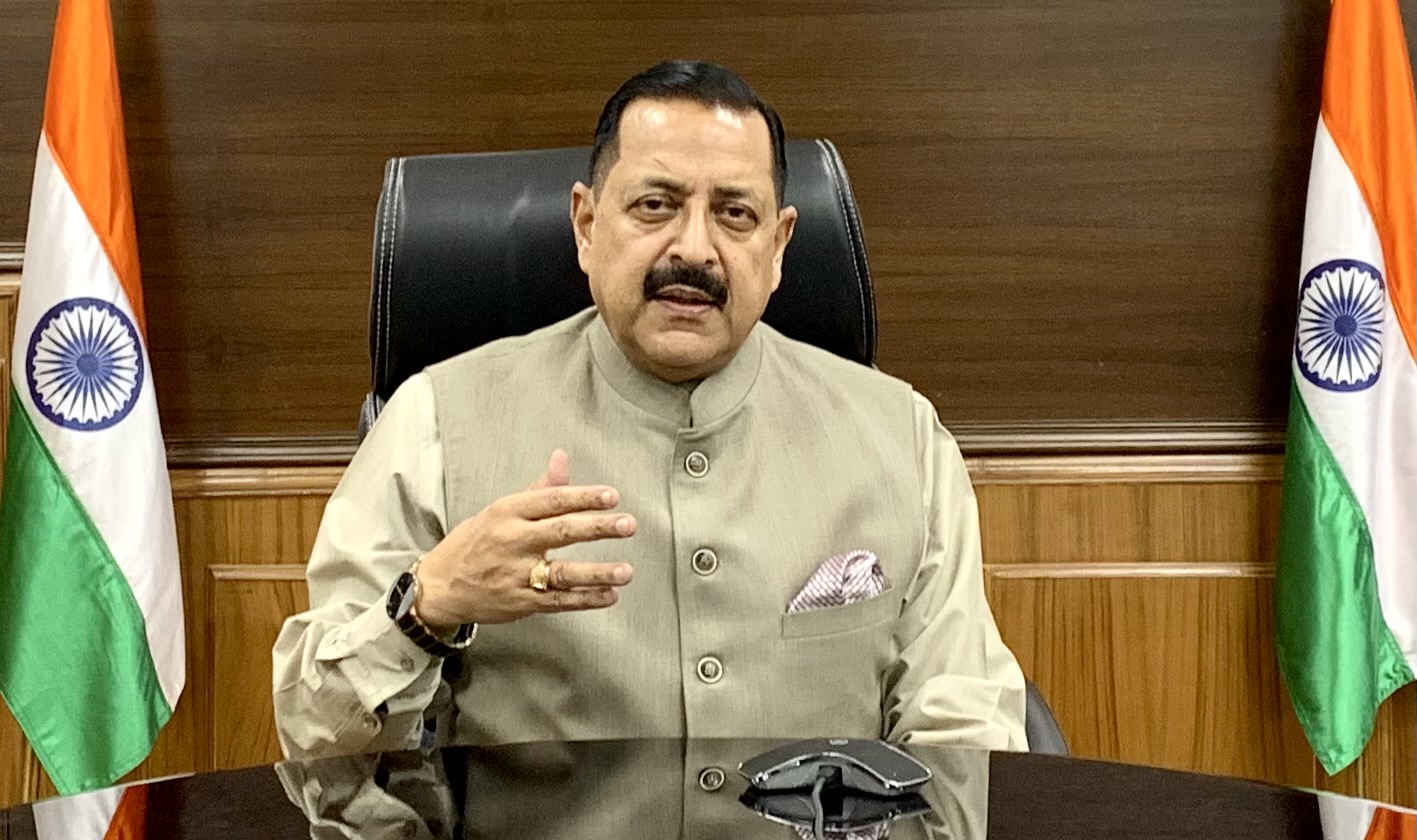

Union Minister of State for Science and Technology Dr Jitendra Singh on Saturday described the successful launch of Skyroot Aerospace’s Vikram-1 rocket as a historic milestone in India’s space journey. He emphasized that the mission reiterates India’s entry into the global space economy and reflects the transformative impact of space reforms initiated under Prime Minister Narendra Modi’s leadership.
Vikram-1, India’s first privately developed orbital-class rocket, lifted off from the Satish Dhawan Space Centre in Sriharikota carrying multiple technology demonstration payloads. Built with an all-carbon composite structure and powered by in-house propulsion systems, including 3D-printed engines and high-thrust solid-fuel boosters, the seven-storey-tall launch vehicle targeted an orbit of 450 km with a 60-degree inclination during its mission “Agaman.”
Dr Singh noted that the achievement was possible because of the government’s decision to open the space sector to private companies, enabling startups like Skyroot to collaborate with ISRO and IN-SPACe. He congratulated Skyroot Aerospace, ISRO, and all stakeholders for creating history by executing India’s first private orbital launch.
The minister highlighted that India’s record of first-time launch success compares favourably with nations that began their space programs decades earlier. He added that the rapid progress achieved in just half a decade demonstrates the strength of India’s public-private partnership in space and the country’s growing capabilities in commercial satellite launch services.
Skyroot’s Vikram-1 launch follows the successful suborbital flight of Vikram-S in November 2022, marking another significant step in India’s expanding private space sector. With over 400 space startups now active, the mission underscores India’s rising position as a global space power and its commitment to building a robust space economy.